
Dementia Care Educational Programme
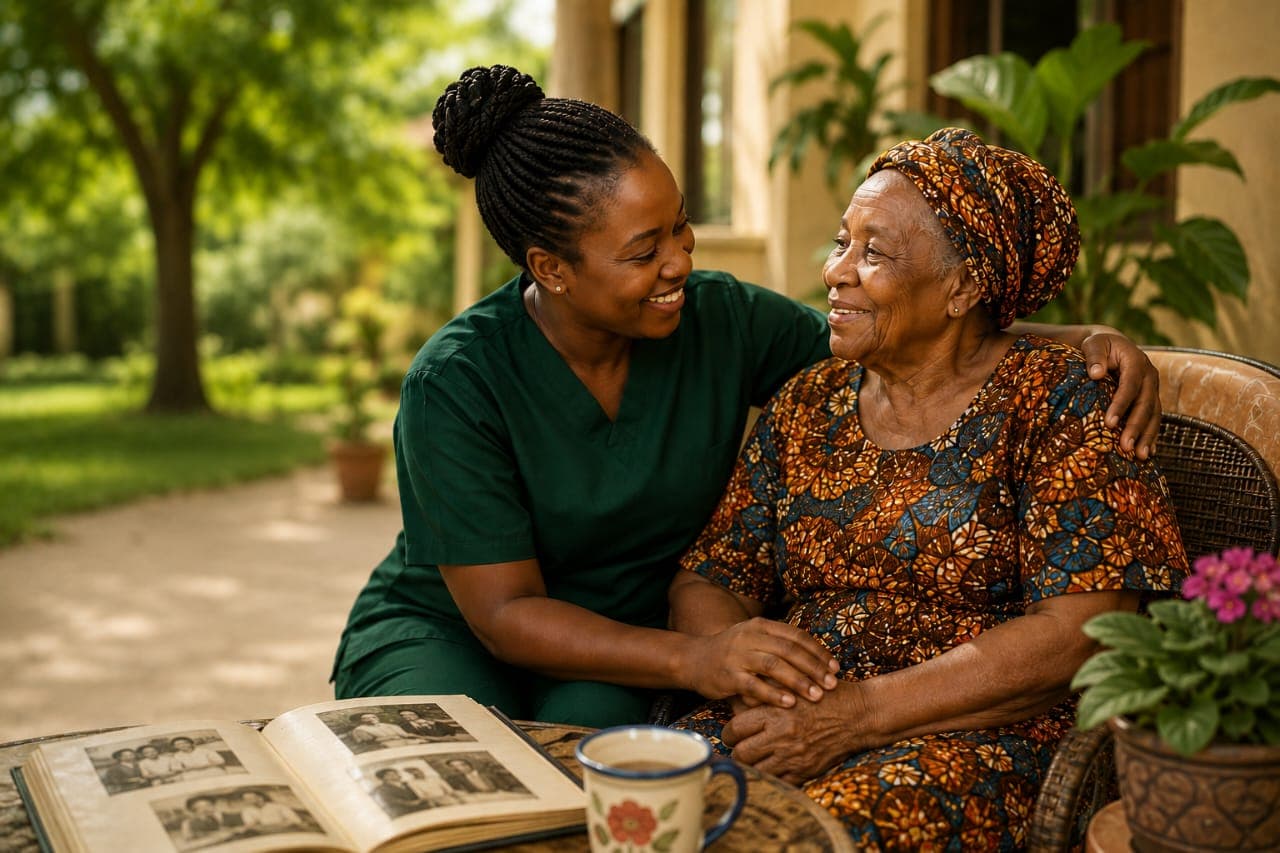
Dementia care begins not with the diagnosis, but with the person.
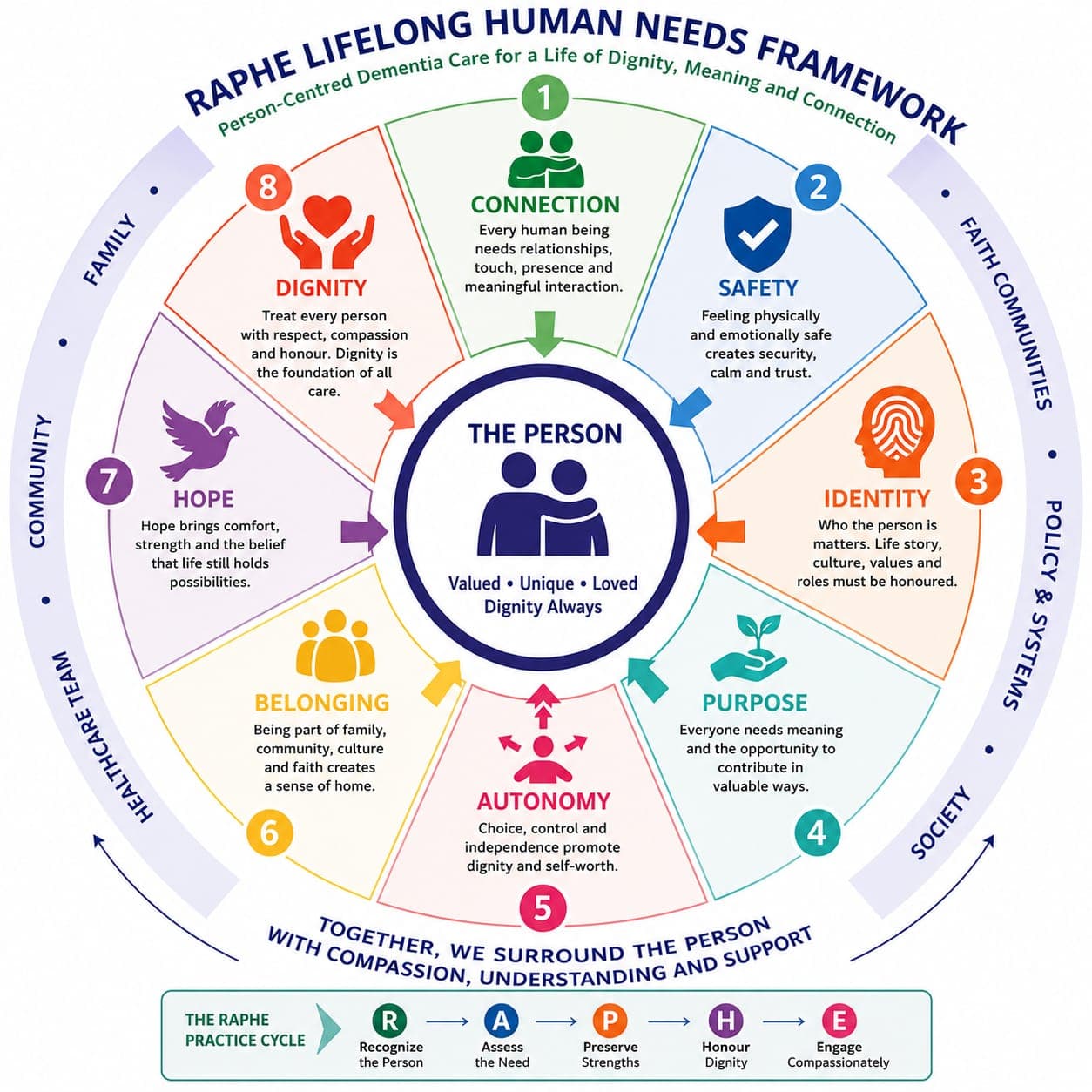
The Raphe Lifelong Human Needs Framework is a person-centred, strength-based, and culturally responsive dementia care model for family caregivers, healthcare professionals, and organisations.
Raphe Lifelong Human Needs Framework
A care model built around dignity, strengths, and human needs.
Our care model is built on the understanding that even in the presence of cognitive decline, every person experiencing dementia still has abilities, emotions, relationships, values, and dignity that must be recognised and respected.
Rather than concentrating solely on what dementia has taken away, we focus on what remains: preserving strengths, promoting independence where possible, and responding to lifelong human needs with compassion and understanding.
This philosophy forms the foundation of the Raphe Lifelong Human Needs Framework, our signature dementia care model guiding our education, caregiver training, professional development, and community support programmes.
The RAPHE Practice Cycle
A practical pathway for everyday care decisions.
The RAPHE Practice Cycle is the practical heart of our framework, helping caregivers respond thoughtfully, relationally, and with compassion.
R - Recognize the Person
See the individual before the diagnosis. Every interaction begins with respect, empathy, and genuine human connection.
A - Assess Needs
Look beneath behaviours to understand unmet physical, emotional, social, spiritual, and environmental needs through careful observation and compassionate inquiry.
P - Preserve Strengths
Support remaining abilities, encourage meaningful participation, and celebrate what the person can still do.
H - Honour Dignity
Protect identity, autonomy, personal choices, and self-worth regardless of cognitive decline.
E - Engage Compassionately
Respond with patience, kindness, evidence-informed practice, and practical compassion.
Why the framework matters
Moving beyond task-based care.
The framework helps caregivers move towards truly person-centred support, because dementia changes memory; it does not diminish humanity.
•Recognise the whole person beyond the illness
•Understand behaviours through unmet human needs
•Preserve dignity and independence
•Build upon remaining strengths and abilities
•Communicate with empathy and confidence
•Strengthen relationships between caregivers and families
•Deliver compassionate, culturally sensitive dementia care
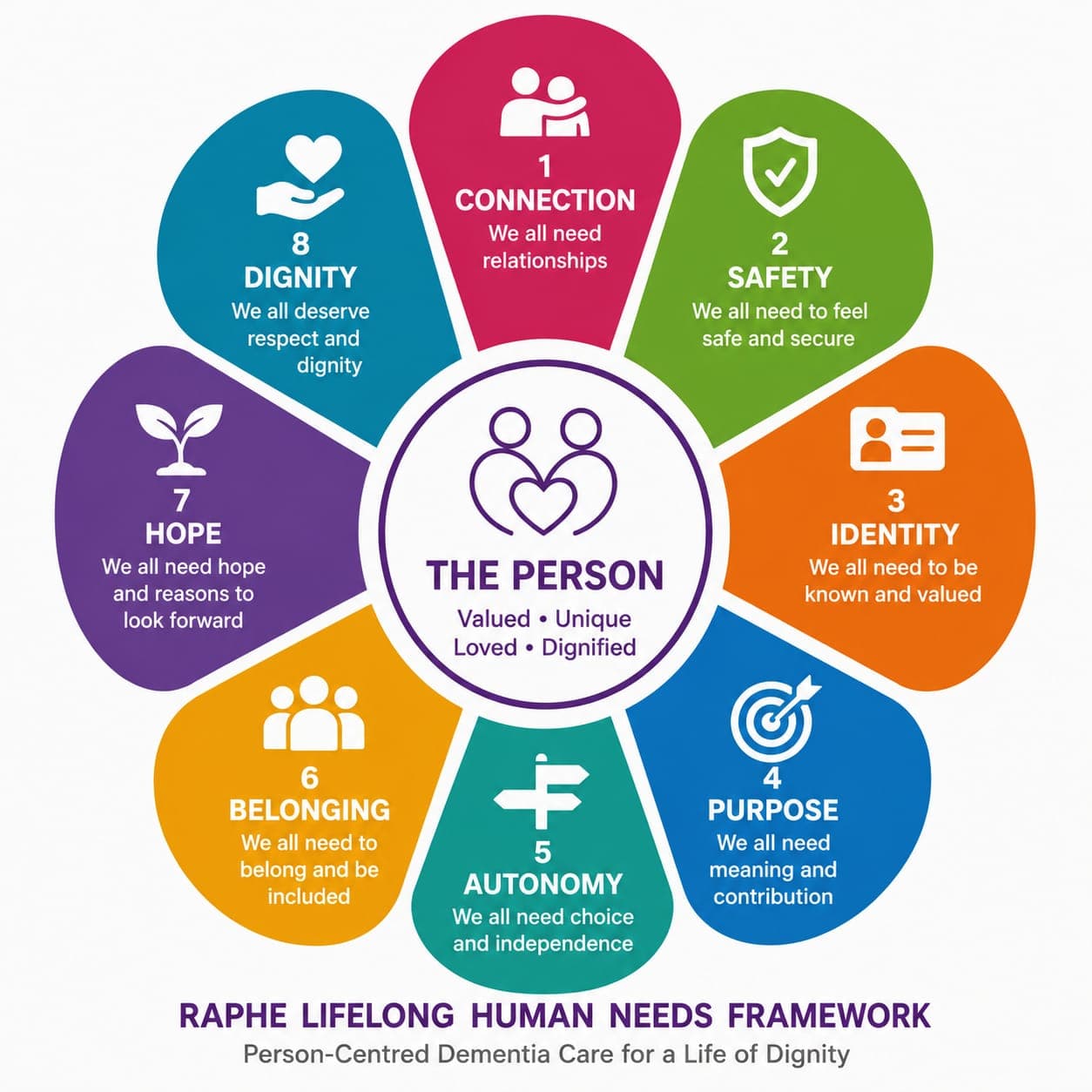
Eight Lifelong Human Needs
Understanding the whole person, not only the condition.
These pillars help caregivers understand the person behind the diagnosis and respond to needs that remain important throughout every stage of life.
Identity
Connection
Safety
Purpose
Autonomy
Belonging
Hope
Dignity

Caregiver as Detective
Looking beneath behaviour to understand the need.
Rather than reacting to behaviours at face value, caregivers learn to observe carefully, ask thoughtful questions, and investigate what the person may be communicating.
Instead of asking, “What has this person lost?”
We ask, “What does this person still need in order to live with dignity?”
That simple shift changes frustration into understanding, confusion into connection, and tasks into meaningful relationships.
Who Should Attend?
For families, professionals, and care organisations.
This education programme is ideal for people supporting a loved one at home, professionals caring for people experiencing dementia, and organisations seeking person-centred dementia care training.
•Family caregivers
•Professional caregivers
•Nurses
•Healthcare assistants
•Social workers
•Occupational therapists
•Physiotherapists
•Community health workers
•Religious leaders and chaplains
•Students and educators
•Residential care providers
•Hospitals, NGOs, and healthcare organisations
What You Will Learn
Practical skills for more confident dementia care.
Participants gain practical skills that improve confidence, competence, and the quality of everyday dementia care.
•Understand dementia beyond memory loss
•Recognise the person behind the diagnosis
•Identify lifelong human needs
•Preserve remaining strengths and abilities
•Communicate with empathy and confidence
•Respond to behaviours with curiosity instead of judgement
•Reduce caregiver stress through better understanding
•Partner effectively with families
•Apply person-centred care principles in everyday practice
•Deliver compassionate, evidence-informed dementia care
Our Vision
Communities where dignity remains at the centre of care.
We envision communities where every person experiencing dementia is recognised not by their diagnosis, but by their humanity.
Communities where caregivers are equipped with knowledge, compassion, and confidence. Communities where dignity remains at the centre of care.
Ready to transform the way you care?
Whether you are caring for a family member, leading a healthcare team, or seeking professional development, the Raphe Lifelong Human Needs Framework will equip you with practical tools that make a meaningful difference.